

Class Warfare
Student behavior is deteriorating, and teachers are leaving the profession as a result.

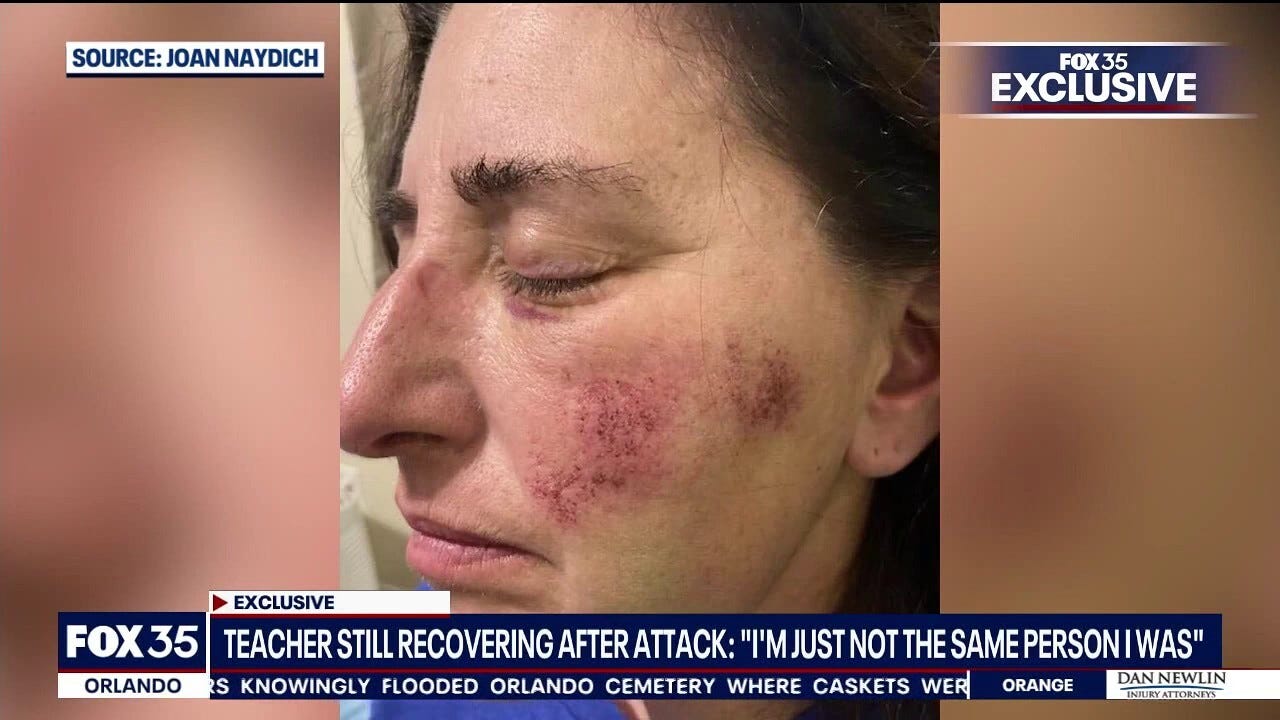
Photo Credit: Foxnews.com
Student violence in many of our nation’s schools is out of control. An Education Week teacher survey, whose results were released in March, found that 35% of respondents said classroom behavior was “a lot worse” than last year. It’s not just children fighting with each other; teachers are often on the receiving end of assaults.
Examples of student violence against teachers are common. In southern California, as reported by the Long Beach Post in June, a Carver Elementary School teacher left school with “major purple marks” after students hit, pinched, bit, and scratched her.
In an explosive moment, one child headbutted her so hard that part of her vision went dark. She went to the emergency room and learned she had an eye injury that permanently altered her eyesight, causing floating dots and flashing lights.
Near Boston, a Roxbury teacher asked an eighth grader to pay attention—and was punched, leaving multiple bruises. A nurse at a Dorchester school sustained a concussion and a pinched nerve after being attacked by a student.
Nationwide, surveys indicate that 6% to 10% of U.S. K-12 teachers are physically attacked by students each year, and an additional 10% to 45% experience verbal threats or harassment.
While the problem is currently garnering significant media attention, it is not new. A 2014 survey by the American Psychological Association Classroom Violence Directed Against Teachers Task Force found that a stunning 44% of educators declared that students physically attacked them. More than half of the surveyed educators reported that pupils destroyed personal property (computers, cars, phones, etc.).
What is the reason for the rampant violence?
Many teachers say parental support is key and that parents need to do a better job of reining in their kids.
While soft or neglectful parenting is certainly part of the problem, schools must also accept responsibility. In that vein, about 50% of educators said that tougher consequences for students, such as expulsions, are needed. Unfortunately, many schools don’t pursue that approach.
Administrators’ response has weakened, many teachers explain, because they have to go through eight or nine steps before they can even consider sending the kid to the office.
Also, many schools still use the discredited—and teacher union supported—Restorative Justice procedure. This racially motivated, fifty-year-old regimen emphasizes “making the victim and offender whole” and involves “an open discussion of feelings.” It arose in the 1970s because black students were far more likely to be suspended than those of other ethnicities. The implication, of course, is that white teachers and administrators tend to be racist. But the racial bean counters never explain why the racial disparity persists even in schools where black principals and staff predominate.
In addition, the Positive Behavioral Interventions and Supports (PBIS) approach, also supported by the two national teachers’ unions, remains widely used. This system, a touchy-feely, new-age idea from the 1990s, aims to create a “framework for creating safe, positive, equitable schools, where every student can feel valued, connected to the school community, and supported by caring adults.”
The practitioners claim that by applying “evidence-based practices within a PBIS framework, schools promote students’ academic, social, emotional, and behavioral success, collaborate with families to develop locally meaningful and culturally relevant outcomes, and use data to make informed decisions that enhance overall effectiveness.”
But PBIS has not helped. Neetu Arnold, a Policy Analyst at the Manhattan Institute, recently wrote, “When I began asking teachers about PBIS, I heard no shortage of complaints. Educators described how it drove disruptive classrooms, undermined their authority, and made effective teaching nearly impossible. Yet when I spoke with PBIS trainers and reviewed official materials, the disconnect was striking: trainers insisted that the teacher accounts didn’t reflect the structured framework they endorsed.”
Student suspensions, a long-time disciplinary measure, are looked down upon these days. In fact,
California prohibits suspensions for low-level misbehavior, such as willful disobedience. Similarly, Massachusetts sets prerequisites for suspensions, directing administrators not to suspend pupils as a consequence until alternative remedies have been tried and documented. In practice, this makes suspension a last resort rather than a baseline tool for classroom management.
Suspensions don’t always work, however. When I taught middle school in the 1990s and 2000s, I found that suspending an out-of-control student made it easier to teach willing learners, but it didn’t always improve the miscreant’s behavior. Upon their return to class after a suspension, I always asked the disruptors how they spent their time out of school. All too often, the reply was a shrug, followed by “Watched TV.” In those cases, it was hardly an effective punishment.
My school, however, was fortunate to have Mr. Thomas as the school’s guidance counselor and discipline dean. He was a former Marine drill sergeant, and his approach was old-school. When misbehaving students were sent to him, he would make them stand facing the front of the room for an hour or two without speaking. He also kept the room a few degrees warmer than necessary. This discouraged pupils from engaging in antisocial behavior when they were threatened with a visit to Mr. Thomas. But few schools have ex-military personnel in the counseling office.
As a result of the upsurge in student violence, many teachers are considering leaving the profession. About 20% of educators across the U.S. said they plan to leave their jobs before school starts in the fall, according to June data from the RAND Corp.’s 2026 State of the American Teacher and the American Life Panel surveys. Misbehaving students are cited as the top stressor.
In Wisconsin, teacher resignations are at an all-time high, with students’ disorderly behavior cited as a top reason.
The problem is particularly acute in California, where a recent survey found that 40% of teachers plan to retire or quit in the next 10 years, with many citing declining behavioral standards as the primary reason.
In sum, schools must do a better job of disciplining disruptive and violent students. Both offenders and well-behaved students aren’t being properly educated. Additionally, many teachers are fed up and are leaving the profession.
* * *
Larry Sand is a retired classroom teacher with 28 years of experience and served as president of the nonprofit California Teachers Empowerment Network from 2006 to 2025. He currently works to raise awareness of the shortcomings of our education system.
Click HERE to visit our new and improved official website on how to leave your union and for different education options!
 | A guest post by
|
Good grief.
Great reporting, Larry!
Very interesting. Very interesting how it has escalated ever since pushing for Social Emotional learning ways of teaching. The point being - teachers need to teach subjects. NOT behavior. AND students should have consequences. The problem is also magnified by teachers now being ADVOCATES rather than teachers. The entire education system needs an overhaul.